Box jump
The box jump is an explosive plyometric exercise that builds lower-body power, speed, and cardiovascular endurance by jumping onto an elevated platform.
Count your Box jump reps with AIFree in your browser — no app, no equipmentHow to Do Box jump
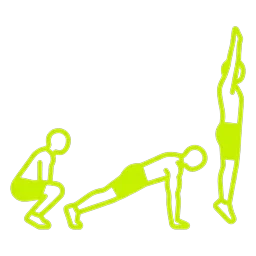
- Stand about an arm's length away from the box with your feet hip-width apart.
- Hinge at your hips and bend your knees while swinging your arms back to prepare for the jump.
- Explode upward, swinging your arms forward and pushing through the balls of your feet to launch yourself into the air.
- Land softly on top of the box on the balls of your feet, bending your knees slightly to absorb the impact.
- Stand up completely to lock out your hips, establishing full control and balance.
- Step down carefully one foot at a time to return to the starting position.
Muscles worked
QuadricepsGlutesHamstringsCalves
Form tips
- Focus on landing softly with your knees tracking in line with your toes, avoiding any inward collapse.
- Use your arms dynamically to generate upward momentum during the takeoff phase.
- Step down instead of jumping down to protect your knees and Achilles tendons from high impact.
Common mistakes
- Jumping down backward from the box, which places excessive stress on the joints and tendons.
- Landing with stiff knees or in a deep, parallel squat, which indicates the box is too high.
- Allowing the knees to cave inward during takeoff or landing.
FAQ
How many reps and sets of box jumps should I perform?
For explosive power, perform 3 to 5 sets of 3 to 5 reps with high intensity and full recovery. For cardiovascular conditioning, perform 3 sets of 10 to 15 reps at a moderate box height.
How high should the box be for beginners?
Beginners should start with a low box height of 12 to 18 inches to master landing mechanics before progressing to higher platforms.
Can I use box jumps for fat loss?
Yes, because they are highly metabolic and engage large lower-body muscle groups, box jumps are excellent for elevating heart rate and burning calories.