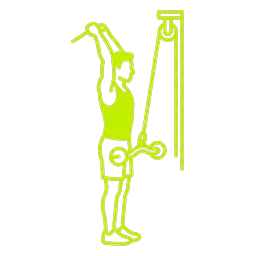
Barbell cable triceps extension
A cable-based isolation exercise that targets the triceps using a straight or EZ-bar attachment. It provides constant tension throughout the movement to build strength and definition in the back of the arms.
Count your Barbell cable triceps extension reps with AIFree in your browser — no app, no equipmentHow to Do Barbell cable triceps extension
- Attach a straight or EZ-bar to a high pulley cable machine and stand facing the stack.
- Grasp the bar with an overhand grip at shoulder-width, and pull it down until your elbows are bent at a 90-degree angle and tucked close to your torso.
- Keep your feet shoulder-width apart, knees slightly bent, and lean forward slightly from your hips.
- Push the bar downward by extending your elbows until your arms are fully straight, squeezing your triceps at the bottom of the movement.
- Slowly return the bar back up to the starting 90-degree position under control, resisting the pull of the cable.
Muscles worked
Triceps BrachiiAnconeusForearms
Form tips
- Keep your elbows pinned to your sides throughout the entire set to isolate the triceps and prevent shoulder involvement.
- Control the eccentric (lowering) phase to maximize muscle fiber recruitment and prevent the weight stack from slamming.
- Keep your wrists straight and rigid to ensure direct force transfer and prevent wrist strain.
Common mistakes
- Allowing the elbows to flare outward, which shifts the workload to the chest and shoulders.
- Using momentum or swinging the upper body to push the weight down instead of isolating the arms.
- Letting the hands rise too high on the return phase, which causes the elbows to drift forward and loses tension on the triceps.
FAQ
How many reps and sets should I do?
For muscle growth and definition, perform 3 to 4 sets of 10 to 15 controlled repetitions with a moderate weight.
Is a straight bar better than a rope attachment?
A straight bar allows you to lift heavier weights and heavily targets the medial and lateral heads, while a rope allows for a greater range of motion and a deeper contraction at the bottom.
Can this exercise cause elbow pain?
It can if you use excessively heavy weight, flare your elbows, or hyperextend the joints. Warm up thoroughly and focus on controlled movements to protect your elbows.