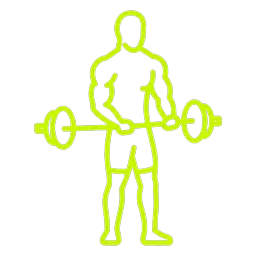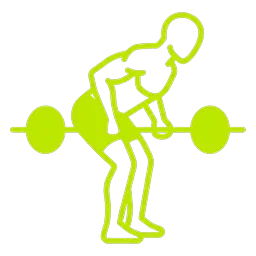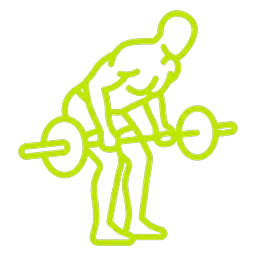
Barbell supinated rowing
A bent-over rowing variation using an underhand grip that targets the back muscles, with an increased emphasis on the lower lats and biceps.
Count your Barbell supinated rowing reps with AIFree in your browser — no app, no equipmentHow to Do Barbell supinated rowing
- Stand with your feet shoulder-width apart, holding a barbell with a shoulder-width, underhand (supinated) grip.
- Hinge forward at your hips at approximately a 45-degree angle, keeping your spine neutral, core engaged, and knees slightly bent.
- Let the barbell hang at arm's length, fully extending your arms while maintaining tension in your upper back.
- Pull the barbell toward your lower abdomen by driving your elbows back and squeezing your shoulder blades together.
- Pause briefly at the peak of the contraction, then slowly lower the barbell back to the starting position under control.
Muscles worked
Latissimus dorsiBiceps brachiiRhomboidsTrapezius
Form tips
- Keep your elbows tucked close to your torso during the pull to maximize lat recruitment.
- Focus on pulling through your elbows rather than pulling the weight with your hands.
- Maintain a constant torso angle throughout the entire set to prevent momentum from taking over.
Common mistakes
- Rounding the lower back, which increases the risk of lumbar spine injury.
- Using excessive momentum by jerking the torso upward to help lift the weight.
- Pulling the bar too high toward the chest, which shifts the focus away from the lats and onto the upper traps.
FAQ
What is the benefit of using an underhand grip?
An underhand (supinated) grip increases the involvement of the biceps and allows the elbows to stay closer to the body, which better targets the lower latissimus dorsi.
How many reps and sets should I do?
For muscle growth and strength, perform 3 to 4 sets of 8 to 12 repetitions, focusing on a controlled eccentric (lowering) phase.
How do I prevent lower back pain during this exercise?
Keep your core braced, maintain a neutral spine, and avoid bending too far forward. If pain persists, reduce the weight or try a chest-supported row variation.