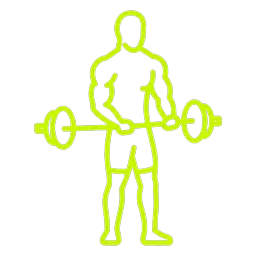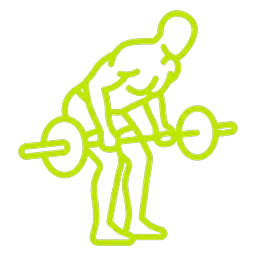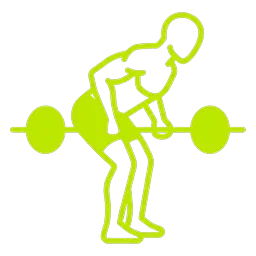
Barbell pronated rowing
A compound upper-body pulling exercise performed with an overhand grip that primarily targets the upper back, lats, and rear deltoids to build thickness and improve posture.
Count your Barbell pronated rowing reps with AIFree in your browser — no app, no equipmentHow to Do Barbell pronated rowing
- Stand with your feet shoulder-width apart, holding a barbell with a pronated overhand grip slightly wider than shoulder-width.
- Hinge at your hips and bend your knees slightly, lowering your torso until it is almost parallel to the floor while keeping your back flat and core engaged.
- Let the barbell hang at arm's length directly below your shoulders.
- Pull the barbell toward your lower chest by driving your elbows up and squeezing your shoulder blades together.
- Pause briefly at the top of the movement, then slowly lower the barbell back to the starting position under control.
Muscles worked
Latissimus dorsiRhomboidsTrapeziusRear deltoidsErector spinae
Form tips
- Keep your elbows flared out at about a 45-degree angle to emphasize the upper back musculature.
- Maintain a neutral spine throughout the entire lift; do not look up or round your lower back.
- Initiate the pull by driving with your elbows rather than pulling with your biceps.
Common mistakes
- Using momentum or bouncing the torso up and down to help lift the weight.
- Rounding the lower back, which transfers stress from the target muscles to the lumbar spine.
- Pulling the bar too high toward the collarbone instead of the lower chest or upper abdomen.
FAQ
How many reps and sets should I do?
For hypertrophy and strength, perform 3 to 4 sets of 8 to 12 repetitions with a weight that challenges you while maintaining perfect form.
What is the difference between a pronated and supinated grip for rowing?
A pronated (overhand) grip targets the upper back, rhomboids, and rear deltoids more effectively, while a supinated (underhand) grip shifts more of the emphasis to the latissimus dorsi and biceps.
How do I prevent lower back pain during this exercise?
Ensure your core is braced, your hips are pushed back in a solid hinge position, and your spine remains completely neutral. If pain persists, reduce the weight or switch to a chest-supported row variation.