Sit-Up
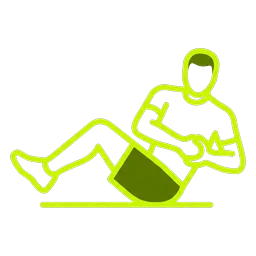
The sit-up is a classic bodyweight core exercise that strengthens the abdominal muscles and hip flexors by raising the torso from a lying position to a sitting position. It helps improve core stability, posture, and functional strength.
Count your Sit-Up reps with AIFree in your browser — no app, no equipmentHow to Do Sit-Up
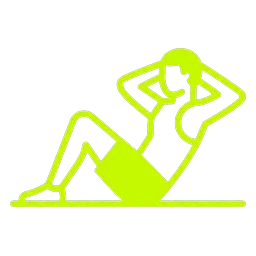
- Lie flat on your back on a mat with your knees bent at a 90-degree angle and your feet flat on the floor.
- Place your hands lightly behind your ears or cross your arms over your chest to avoid pulling on your neck.
- Engage your core and exhale as you lift your torso off the floor, bringing your chest toward your thighs.
- Pause briefly at the top of the movement, maintaining a tall, upright spine.
- Inhale as you slowly lower your torso back down to the starting position with control, one vertebra at a time.
Muscles worked
Rectus AbdominisHip FlexorsObliquesTransverse Abdominis
Form tips
- Keep your feet anchored flat on the floor throughout the entire movement; do not let them lift.
- Focus on pulling from your abdominal muscles rather than using momentum or pulling your neck with your hands.
- Perform the lowering phase slowly to maximize time under tension and protect your spine.
Common mistakes
- Yanking the neck forward with the hands, which places unnecessary strain on the cervical spine.
- Using momentum by swinging the arms or jerking the torso upward instead of engaging the core.
- Arching the lower back excessively at the start of the movement instead of keeping it neutral.
FAQ
How many reps and sets of sit-ups should I do?
For general core strength, perform 3 to 4 sets of 15 to 20 controlled repetitions, focusing on form rather than speed.
How can I prevent neck pain during sit-ups?
Avoid placing your hands behind your head where you might pull on your neck. Instead, cross your arms over your chest or lightly touch your fingertips to your temples.
Is a sit-up safe for people with lower back pain?
If you have lower back issues, sit-ups can strain the lumbar spine due to flexion. Consider safer alternatives like the McGill curl-up or planks.