Deadlift
The deadlift is a fundamental compound exercise that targets the entire posterior chain, building raw strength and power in the hips, glutes, and back. It is highly effective for improving overall athletic performance, posture, and functional daily strength.
Count your Deadlift reps with AIFree in your browser — no app, no equipmentHow to Do Deadlift
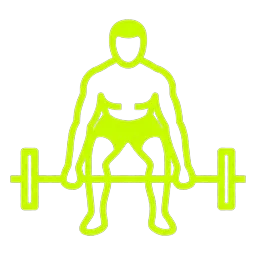
- Stand with your feet hip-width apart, with the barbell positioned directly over the middle of your feet.
- Hinge at your hips and bend your knees slightly to grip the bar with a shoulder-width, overhand or mixed grip.
- Flatten your back, engage your lats by pulling your shoulders back and down, and lower your hips until your shins touch the bar.
- Drive through your feet to push the floor away, keeping the bar close to your body as you stand up to a fully locked-out position.
- Lower the bar back to the floor under control by hinging at your hips first, then bending your knees once the bar passes them.
Muscles worked
Form tips
- Keep the bar in contact with, or very close to, your shins and thighs throughout the entire movement to maintain leverage.
- Brace your core deeply before initiating the lift, packing your abdomen with air to protect your spine.
- Keep your neck in a neutral alignment by looking at a spot on the floor a few feet in front of you rather than looking up at a mirror.
Common mistakes
- Rounding the lower back during the pull, which places dangerous shear stress on the lumbar spine.
- Hyperextending or leaning back excessively at the top of the lift instead of simply standing tall and squeezing the glutes.
- Allowing the bar to drift away from the body, which shifts the load onto the lower back and reduces mechanical efficiency.
FAQ
How many reps and sets of deadlifts should I perform?
For strength, perform 3 to 5 sets of 3 to 5 reps. For hypertrophy and general conditioning, 3 sets of 8 to 10 reps with a lighter, controlled weight is recommended.
Should I use a weightlifting belt when deadlifting?
A belt is not strictly necessary but can provide extra intra-abdominal pressure and spinal support when lifting heavy loads near your maximum capacity.
What is the difference between a conventional deadlift and a sumo deadlift?
The conventional deadlift uses a narrow stance with hands outside the knees, placing more emphasis on the lower back and hamstrings. The sumo deadlift uses a wide stance with hands inside the knees, targeting the quadriceps and adductors more heavily.