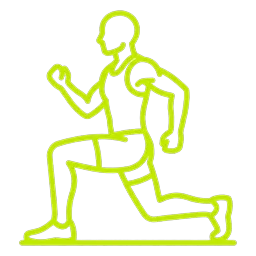
Lunge
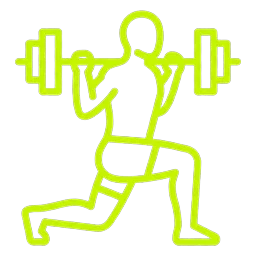
The lunge is a unilateral lower-body exercise that targets the quadriceps, glutes, and hamstrings. It improves single-leg strength, balance, and hip mobility, making it highly functional for daily movement and athletic performance.
Count your Lunge reps with AIFree in your browser — no app, no equipmentHow to Do Lunge
- Stand tall with your feet hip-width apart, shoulders back, and your core engaged.
- Take a large step forward with one foot, keeping your hands on your hips or held at your chest for balance.
- Lower your hips until your front thigh is parallel to the floor and your back knee is hovering just above the ground, with both knees bent at approximately 90-degree angles.
- Keep your torso upright and ensure your front knee stays aligned with your ankle, not pushing past your toes.
- Push off your front heel to return to the starting position, then repeat the movement on the opposite leg.
Muscles worked
Form tips
- Keep your weight distributed evenly, focusing on driving through the heel of your front foot to maximize glute recruitment.
- Maintain an upright posture throughout the movement; do not allow your lower back to arch or your torso to lean excessively forward.
- Ensure your feet remain hip-width apart as you step forward to maintain a stable base of support and prevent losing your balance.
Common mistakes
- Allowing the front knee to cave inward, which puts unnecessary stress on the knee joint and ligaments.
- Taking too short of a step, which causes the front heel to lift off the ground and shifts excessive load onto the knee.
- Letting the torso collapse forward, which reduces the engagement of the legs and places strain on the lower back.
FAQ
How many reps and sets of lunges should I do?
For general fitness and strength, aim for 3 to 4 sets of 10 to 12 repetitions per leg. If focusing on endurance, you can increase to 15 to 20 repetitions per leg.
Is it better to do forward lunges or reverse lunges?
Reverse lunges are generally easier on the knees and make it easier to maintain balance, making them ideal for beginners. Forward lunges place more emphasis on the quadriceps but require more deceleration control.
Why do my knees hurt when doing lunges?
Knee pain is often caused by taking too short of a step, allowing the front knee to push too far past the toes, or letting the knee cave inward. Focus on stepping out farther and keeping your front heel firmly planted.