Wall Sit
The wall sit is an isometric lower-body exercise that builds muscular endurance and strength in the quadriceps, hamstrings, and glutes. It is highly effective for improving joint stability and lower-body stamina without putting impact stress on the joints.
Count your Wall Sit reps with AIFree in your browser — no app, no equipmentHow to Do Wall Sit
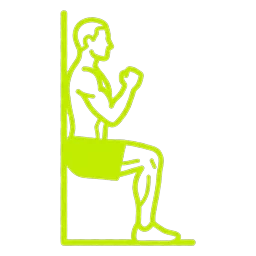
- Stand with your back flat against a smooth, sturdy wall, with your feet positioned about shoulder-width apart and roughly two feet away from the wall.
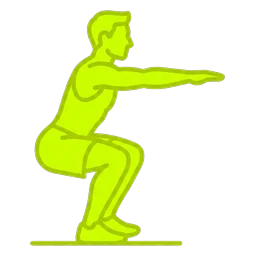
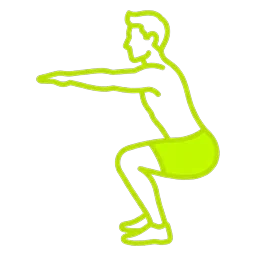
- Slowly slide your back down the wall until your thighs are parallel to the floor, creating a 90-degree angle at both your hips and knees.
- Adjust your feet if necessary so that your knees are positioned directly above your ankles, rather than tracking forward over your toes.
- Press your entire back, including your lower back and shoulders, firmly against the wall.
- Keep your arms resting flat against the wall at your sides, crossed over your chest, or extended straight out in front of you.
- Hold this position for the target duration while breathing deeply, then push through your heels to slide back up the wall to stand.
Muscles worked
Form tips
- Keep your weight distributed primarily through your heels rather than your toes to maximize glute and quad activation.
- Actively pull your belly button toward your spine to keep your core engaged and prevent your lower back from arching away from the wall.
- Avoid resting your hands on your knees or thighs, as this transfers weight away from your legs and reduces the effectiveness of the hold.
Common mistakes
- Allowing the knees to cave inward toward each other, which places unsafe lateral stress on the knee joints.
- Positioning the feet too close to the wall, causing the knees to extend past the toes and increasing joint pressure.
- Arching the lower back away from the wall, which reduces core engagement and can cause lower back discomfort.
FAQ
How long should I hold a wall sit and how many sets should I do?
Aim for 3 to 4 sets of 30 to 60 seconds. Beginners can start with 15 to 20 seconds and gradually increase the duration as their muscular endurance improves.
What should I do if I feel knee pain during a wall sit?
If you experience knee pain, slide your hips slightly higher up the wall to reduce the knee angle to 45 or 60 degrees, and ensure your heels are far enough forward so your knees do not overshoot your ankles.
How can I make the wall sit more challenging?
You can increase the intensity by holding a dumbbell or medicine ball against your chest, squeezing a yoga block between your knees, or lifting one foot slightly off the ground to perform a single-leg wall sit.