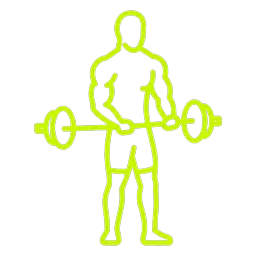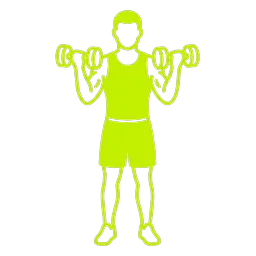
Dumbbell biceps curl
The dumbbell biceps curl is a classic isolation exercise that targets the front of the upper arm. It helps build biceps strength, size, and elbow flexion stability.
Count your Dumbbell biceps curl reps with AIFree in your browser — no app, no equipmentHow to Do Dumbbell biceps curl
- Stand upright with a dumbbell in each hand, arms extended at your sides, and palms facing forward.
- Keep your elbows close to your torso and your shoulders pinned back.
- Exhale and curl the weights upward by flexing at the elbows, keeping your upper arms stationary.
- Continue raising the dumbbells until your biceps are fully contracted and the dumbbells are at shoulder level.
- Inhale and slowly lower the dumbbells back to the starting position with control.
Muscles worked
Biceps brachiiBrachialisBrachioradialis
Form tips
- Keep your elbows locked at your sides throughout the movement to ensure isolation of the biceps.
- Squeeze your biceps hard at the top of the movement for one second to maximize muscle fiber recruitment.
- Control the eccentric (lowering) phase of the lift, taking about 2-3 seconds to lower the weights.
Common mistakes
- Swinging the torso or using momentum to lift the weights, which reduces the load on the biceps.
- Allowing the elbows to drift forward or flare outward during the curl.
- Failing to fully extend the arms at the bottom of the movement, reducing the range of motion.
FAQ
How many reps and sets should I do?
For muscle hypertrophy, perform 3 to 4 sets of 8 to 12 repetitions with a weight that challenges you near the end of each set.
Is it better to curl both dumbbells simultaneously or alternate arms?
Both methods are effective. Alternating arms allows you to focus more on each individual arm and may allow for slightly heavier weights, while simultaneous curls keep constant tension on both arms and save time.
How do I prevent forearm pain during biceps curls?
Ensure you are not gripping the dumbbells too tightly and keep your wrists in a neutral, straight position rather than letting them bend backward.