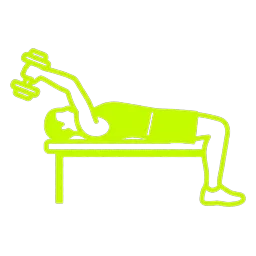
Dumbbell pull over
The dumbbell pullover is a classic upper-body exercise that targets both the chest and the lats while improving shoulder mobility. It helps build thickness in the upper torso and strengthens the serratus anterior.
Count your Dumbbell pull over reps with AIFree in your browser — no app, no equipmentHow to Do Dumbbell pull over
- Lie perpendicular to a flat bench with only your upper back and shoulders resting on the surface, keeping your feet flat on the floor and your hips slightly dipped.
- Hold a single dumbbell with both hands, forming a diamond shape with your palms against the underside of the top weight plate, and extend your arms straight up over your chest.
- Inhale and slowly lower the dumbbell backward over your head in a controlled arc, keeping a slight bend in your elbows, until your upper arms are in line with your torso.
- Exhale and engage your chest and lats to pull the dumbbell back along the same arc to the starting position directly over your chest.
Muscles worked
Latissimus dorsiPectoralis majorSerratus anteriorTriceps brachii
Form tips
- Keep your hips slightly lower than the bench and your core braced to prevent your lower back from arching excessively.
- Maintain a constant, slight bend in your elbows throughout the entire movement to avoid shifting the load entirely to your triceps.
- Focus on pulling the weight back up using your armpits and chest muscles rather than pushing with your hands.
Common mistakes
- Bending and extending the elbows during the movement, which turns the pullover into a triceps extension.
- Lowering the dumbbell too far beyond your shoulder mobility limits, which places excessive, unsafe strain on the shoulder joints.
- Allowing the hips to rise up as the weight lowers, which neutralizes core engagement and hyperextends the lumbar spine.
FAQ
How many reps and sets should I perform?
For muscle growth and upper-body conditioning, perform 3 to 4 sets of 8 to 12 repetitions, focusing on a slow, controlled negative phase.
Does the dumbbell pullover target the chest or the back?
It targets both. The deep stretch at the bottom of the movement heavily recruits the latissimus dorsi, while the contraction at the top of the movement primarily engages the sternal head of the pectoralis major.
Is it safer to lie flat along the bench instead of perpendicular?
Yes, lying flat along the bench provides full spinal support and is highly recommended for beginners or those with lower back issues, as it reduces the demand on hip and core stability.