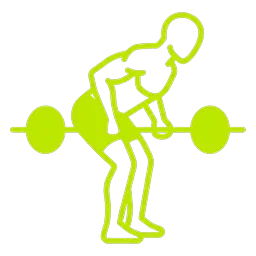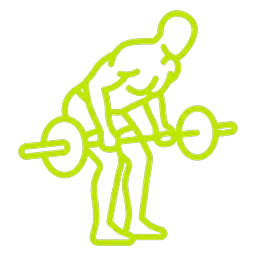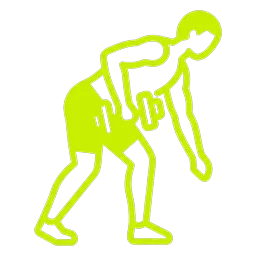
Dumbbell rowing
A unilateral pulling exercise that targets the muscles of the upper back and lats, helping to correct strength imbalances and improve posture.
Count your Dumbbell rowing reps with AIFree in your browser — no app, no equipmentHow to Do Dumbbell rowing
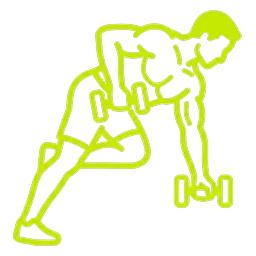
- Place your left knee and left hand firmly on a flat bench to support your body, keeping your torso parallel to the floor.
- Keep your right foot flat on the ground and hold a dumbbell in your right hand with an arm fully extended toward the floor.
- Pull the dumbbell up toward your hip, keeping your elbow tucked close to your side and squeezing your shoulder blade at the top.
- Lower the weight under control back to the starting position, fully extending your arm without letting your shoulder drop.
- Complete your repetitions on one side, then switch your stance to repeat on the opposite side.
Muscles worked
Latissimus dorsiRhomboidsTrapeziusRear deltoidsBiceps
Form tips
- Focus on pulling with your elbow rather than your hand to maximize lat engagement and minimize bicep dominance.
- Keep your spine neutral from your neck to your tailbone; avoid looking up or rounding your back.
- Keep your hips and shoulders square to the floor throughout the entire movement to prevent torso rotation.
Common mistakes
- Yanking the weight up using momentum instead of a controlled, muscular contraction.
- Flaring the elbow out wide, which shifts the tension from the back muscles to the shoulder joint.
- Allowing the lower back to round, which puts unnecessary stress on the spine.
FAQ
How many reps and sets should I do?
For muscle growth and strength, perform 3 to 4 sets of 8 to 12 controlled repetitions per side.
What is the difference between pulling to the chest versus pulling to the hip?
Pulling the dumbbell to your hip targets the lower lats, while pulling higher up toward your chest targets the upper back and rear deltoids.
Can I perform this exercise standing without a bench?
Yes, you can perform a standing single-arm row by placing one foot forward in a split stance and bracing your non-working hand on your thigh or a stable rack.