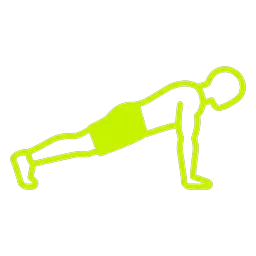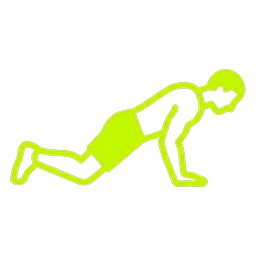
Kneeling push up
The kneeling push-up is a beginner-friendly variation of the standard push-up that reduces the amount of body weight you have to lift. It primarily targets the chest, shoulders, and triceps, helping to build foundational upper-body strength.
Count your Kneeling push up reps with AIFree in your browser — no app, no equipmentHow to Do Kneeling push up
- Start on your hands and knees, with your hands placed slightly wider than shoulder-width apart on the floor.
- Extend your hips forward so your body forms a straight line from your head to your knees, engaging your core and glutes.
- Lower your chest toward the floor by bending your elbows at a 45-degree angle to your body.
- Continue lowering until your chest is just above the floor, keeping your neck in a neutral position.
- Push through your hands to return to the starting position, fully extending your arms without locking your elbows.
Muscles worked
ChestTricepsAnterior DeltoidsCore
Form tips
- Keep your core tight and glutes engaged to prevent your lower back from sagging.
- Keep your elbows tucked at a 45-degree angle rather than flaring them out to the sides to protect your shoulders.
- Focus on a full range of motion, lowering your chest as close to the ground as possible on every repetition.
Common mistakes
- Flaring the elbows out at a 90-degree angle, which places excessive stress on the shoulder joints.
- Leaving the hips behind and bending only at the waist instead of maintaining a straight line from knees to head.
- Sagging the lower back due to a lack of core engagement.
FAQ
How many reps and sets of kneeling push-ups should I do?
Beginners should aim for 3 sets of 8 to 12 repetitions, focusing on maintaining perfect form throughout each set.
How do I transition from kneeling push-ups to standard push-ups?
Gradually increase your repetitions of kneeling push-ups, or incorporate incline push-ups on a bench to build the core and upper body strength needed for a full floor push-up.
Is it normal to feel this exercise in my lower back?
No, lower back pain usually indicates that your hips are sagging. Actively squeeze your glutes and pull your belly button toward your spine to keep your hips aligned.