Plank and reach
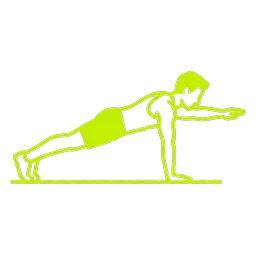
The plank and reach is a dynamic core exercise that challenges your stability by reducing your contact points with the floor. It strengthens the deep abdominal muscles and obliques while improving shoulder stability and rotational control.
Count your Plank and reach reps with AIFree in your browser — no app, no equipmentHow to Do Plank and reach
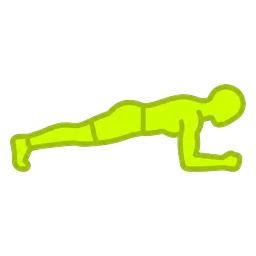
- Start in a standard forearm plank position with your elbows directly under your shoulders and your feet hip-width apart.
- Engage your core, squeeze your glutes, and ensure your body forms a straight line from head to heels.
- Slowly reach one arm straight out in front of you, keeping it parallel to the floor.
- Pause for a brief second at the peak of the reach, focusing on keeping your hips completely level.
- Return your arm to the starting forearm plank position with control.
- Repeat the movement by reaching with the opposite arm, alternating sides for each repetition.
Muscles worked
Rectus AbdominisTransverse AbdominisObliquesDeltoids
Form tips
- Widen your foot placement to create a more stable base and prevent your hips from rocking.
- Keep your neck in a neutral position by looking at the floor slightly ahead of your hands.
- Focus on reaching forward rather than upward to maintain proper shoulder alignment.
Common mistakes
- Rotating the hips and torso side-to-side instead of keeping them parallel to the floor.
- Allowing the lower back to arch and the hips to sag toward the ground.
- Rushing through the reaches, which uses momentum instead of core muscle engagement.
FAQ
How many reps and sets should I do?
Aim for 3 sets of 10 to 16 alternating reps (5 to 8 reaches per arm), focusing on slow and controlled movement.
How can I make this exercise easier if I lose my balance?
You can modify the exercise by widening your feet even further, or by performing the plank and reach from your knees.
Is it better to do this on my hands or my forearms?
Performing it on your forearms is generally preferred as it reduces wrist strain and keeps your center of gravity lower, making it easier to detect hip rotation.