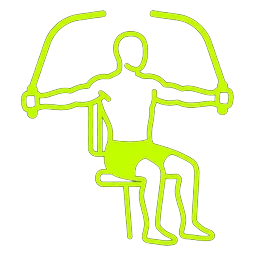
Reverse pec deck fly
A machine-based isolation exercise that targets the rear deltoids and upper back to improve shoulder health, posture, and upper body symmetry.
Count your Reverse pec deck fly reps with AIFree in your browser — no app, no equipmentHow to Do Reverse pec deck fly
- Adjust the seat height so that the handles are aligned directly with your shoulders when you sit facing the machine.
- Sit facing the pad with your chest pressed firmly against it, and grip the handles with a neutral or pronated grip.
- Maintain a slight bend in your elbows and keep your feet flat on the floor for stability.
- Exhale and pull your arms back in a wide horizontal arc until they are in line with your torso, squeezing your shoulder blades together.
- Inhale and slowly reverse the motion, returning the handles to the starting position without letting the weight stack touch.
Muscles worked
Rear DeltoidsRhomboidsTrapeziusInfraspinatus
Form tips
- Keep your chest pressed firmly against the support pad throughout the entire movement to eliminate momentum.
- Lead the movement with your elbows rather than pulling with your hands to better isolate the rear deltoids.
- Maintain a constant, slight bend in your elbows to avoid engaging the triceps.
Common mistakes
- Shrugging the shoulders upward during the pull, which shifts the tension to the upper trapezius.
- Allowing the chest to lift off the pad, which indicates using momentum or too much weight.
- Using an incomplete range of motion by not pulling the arms back far enough to fully engage the target muscles.
FAQ
How many reps and sets should I perform?
For muscle hypertrophy and endurance, perform 3 to 4 sets of 12 to 15 repetitions, focusing on a slow tempo and a strong contraction.
Should I use a neutral (palms facing) or pronated (palms down) grip?
Both are effective; a pronated grip isolates the rear deltoid slightly more, while a neutral grip is often more comfortable for individuals with shoulder impingement issues.
Can I do this exercise if I have shoulder pain?
If you experience pain, try reducing the weight, adjusting the seat height, or switching to a neutral grip. Consult a professional if the pain persists.