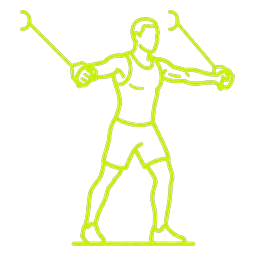
Stand up mid cable fly
The standing mid cable fly is an isolation exercise that targets the sternal head of the pectoralis major. It provides constant tension throughout the range of motion to maximize chest hypertrophy and inner-chest definition.
Count your Stand up mid cable fly reps with AIFree in your browser — no app, no equipmentHow to Do Stand up mid cable fly
- Set the cable pulleys to chest height and attach D-handle attachments to both sides.
- Grasp the handles, step forward into a staggered stance to establish a stable base, and keep a slight bend in your elbows.
- Start with your arms extended out to the sides, feeling a stretch in your chest, with your torso slightly leaned forward.
- Exhale and bring your hands together in a wide arcing motion in front of your chest, focusing on squeezing your pectoral muscles at the peak contraction.
- Inhale and slowly reverse the movement back to the starting position under control, maintaining the slight bend in your elbows.
Muscles worked
Pectoralis majorAnterior deltoidSerratus anterior
Form tips
- Maintain a constant, slight bend in your elbows throughout the entire movement to isolate the chest and avoid turning the fly into a press.
- Keep your shoulder blades retracted and chest proud to prevent the anterior deltoids from taking over the movement.
- Focus on bringing your biceps together rather than just your hands to maximize pectoral contraction.
Common mistakes
- Bending and extending the elbows excessively, which converts the fly into a chest press.
- Allowing the cables to pull your arms too far behind your torso, placing excessive stress on the anterior shoulder capsule.
- Using excessive weight and relying on momentum or torso swinging to complete the repetition.
FAQ
How many reps and sets should I perform?
For optimal chest hypertrophy, perform 3 to 4 sets of 10 to 15 reps, focusing on a slow eccentric phase and a strong squeeze at the peak contraction.
What is the difference between high, mid, and low cable flies?
Mid cable flies target the sternal head (middle chest), high cable flies target the clavicular head (upper chest), and low cable flies target the lower pectoralis major.
Is a staggered stance better than a parallel stance?
A staggered stance is generally preferred because it provides a wider base of support, preventing you from losing balance or being pulled backward by the weight.