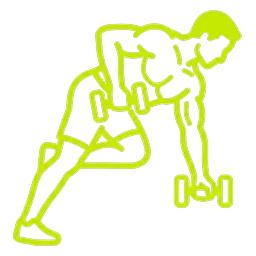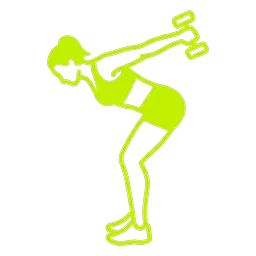
Triceps dumbbell kick back
The triceps dumbbell kickback is a highly effective isolation exercise that targets all three heads of the triceps brachii, helping to build upper arm strength and definition.
Count your Triceps dumbbell kick back reps with AIFree in your browser — no app, no equipmentHow to Do Triceps dumbbell kick back
- Hold a dumbbell in one hand, hinge forward at the hips to approximately a 45-degree angle, keeping your spine neutral and core engaged.
- Support your body by placing your opposite hand and knee on a flat bench, or stand in a staggered stance.
- Pull your working elbow up so your upper arm is parallel to your torso and pinned close to your side, bending your elbow to 90 degrees.
- Keeping your upper arm completely stationary, exhale and extend your arm fully behind you by contracting your triceps.
- Squeeze the triceps at the peak of the contraction for a second, then slowly lower the dumbbell back to the 90-degree starting position.
Muscles worked
TricepsRear DeltoidsCore
Form tips
- Keep your elbow pinned to your side and parallel to the floor throughout the entire movement to isolate the triceps.
- Focus on a controlled, slow eccentric phase rather than letting gravity drop the weight.
- Keep your head and neck in a neutral alignment with your spine; avoid looking up or letting your head sag.
Common mistakes
- Using momentum and swinging the shoulder to move the weight instead of isolating the triceps.
- Allowing the elbow to drop during the extension, which shifts the load to the shoulders.
- Flaring the elbow outward away from the body, which reduces tension on the target muscle.
FAQ
How many sets and reps should I perform?
For hypertrophy and muscle definition, perform 3 to 4 sets of 12 to 15 repetitions per arm with a light to moderate weight.
Can I perform this exercise standing without a bench?
Yes, you can perform it in a standing, staggered stance while hinging forward at the hips, though using a bench provides better spinal support and stability.
Why do my shoulders hurt during this exercise?
Shoulder discomfort usually happens if you are dropping your elbow or using too much weight, which forces the rear deltoids and rotator cuff to overcompensate.