Turkish get up
The Turkish get-up is a highly functional, multi-joint movement that requires moving from a lying position to standing while keeping a weight stabilized overhead. It builds exceptional core strength, shoulder stability, and full-body coordination.
Count your Turkish get up reps with AIFree in your browser — no app, no equipmentHow to Do Turkish get up
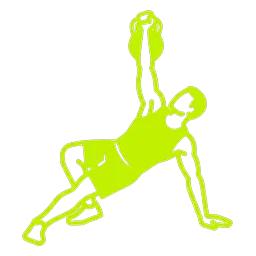
- Lie on your back next to the kettlebell, roll onto your side to grasp it with both hands, press it up, then release your non-working hand and leg to a 45-degree angle while keeping the working knee bent and foot flat on the floor.
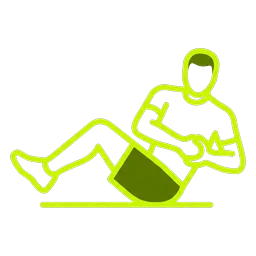
- Keep your eyes on the kettlebell and drive through your foot on the working side to roll up onto your opposite forearm, then push up onto your hand.
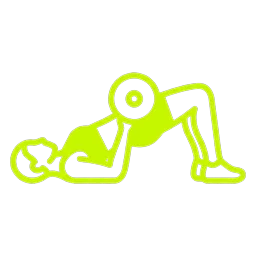
- Bridge your hips high off the ground and sweep your straight leg back, placing your knee directly under your hip.
- Align your torso upright into a half-kneeling position, taking your hand off the floor, and swivel your back leg so your feet are aligned.
- Drive through both feet to stand up completely, keeping the kettlebell locked out overhead, then reverse the steps exactly to return to the starting position.
Muscles worked
ShouldersCoreGlutesTriceps
Form tips
- Keep your eyes locked on the kettlebell throughout the entire movement until you are standing upright.
- Pack your shoulder down and back to keep the joint stable; do not let your shoulder shrug toward your ear.
- Move slowly and deliberately through each phase of the lift rather than rushing the transitions.
Common mistakes
- Bending the elbow of the loaded arm, which transfers the load from the skeleton to the muscles.
- Lifting the foot of the bent leg off the floor during the initial roll-up phase.
- Rushing the leg sweep and placing the knee too far forward or back, compromising hip alignment.
FAQ
How many reps and sets of Turkish get-ups should I perform?
Perform 3 to 5 sets of 1 to 5 reps per side. Because of the high neurological demand and complexity, keep the reps low and focus on perfect execution.
Can I use a dumbbell instead of a kettlebell?
Yes, a dumbbell can be used. However, a kettlebell is preferred as its off-center center of gravity provides a unique shoulder stability challenge.
What should I do if I lose my balance during the lift?
If you lose control of the weight, safely push it away from your body and move yourself in the opposite direction. Never try to save a failing lift overhead.