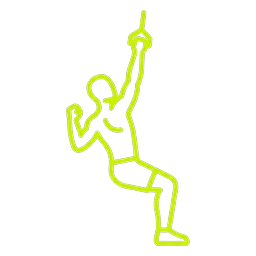
Unilateral lat pull down
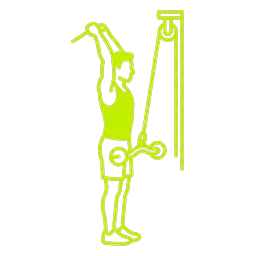
A single-arm variation of the traditional lat pulldown that allows for a greater range of motion and helps correct strength imbalances between sides. It targets the latissimus dorsi while engaging the core for stability.
Count your Unilateral lat pull down reps with AIFree in your browser — no app, no equipmentHow to Do Unilateral lat pull down
- Attach a single D-handle to a high cable pulley and adjust the thigh pad of the pulldown machine so you are securely locked in.
- Reach up and grasp the handle with one hand using a neutral grip (palm facing inward), fully extending your arm.
- Keep your torso upright, chest proud, and engage your core to prevent your body from rotating toward the working side.
- Pull your elbow down and slightly back toward your hip, driving the movement with your lat muscle rather than pulling with your hand.
- Squeeze your lat at the bottom of the movement for a second, then slowly control the weight back to the starting position, allowing a full stretch at the top.
Muscles worked
Form tips
- Focus on driving your elbow down toward your back pocket to maximize lat recruitment and minimize bicep dominance.
- Keep your non-working hand on your thigh or hip to help stabilize your torso and prevent trunk rotation.
- Incorporate a very slight lateral lean toward the working side at the bottom of the movement to enhance the muscular contraction.
Common mistakes
- Rotating the torso to use momentum instead of keeping the chest facing forward throughout the entire movement.
- Allowing the shoulder to shrug upward toward the ear, which transfers the load to the upper traps.
- Letting the weight snap back up quickly during the eccentric phase, losing tension and risking shoulder strain.
FAQ
How many reps and sets should I perform?
For hypertrophy and correcting imbalances, perform 3 to 4 sets of 8 to 12 controlled repetitions per side. Always start with your weaker side and match the reps with your stronger side.
What are the main benefits of the unilateral lat pulldown over the bilateral version?
It allows you to isolate each side of your back to correct strength and size discrepancies, provides a slightly longer range of motion, and engages the core to resist lateral rotation.
Can I perform this exercise kneeling instead of sitting?
Yes, performing this from a half-kneeling position on the floor is an excellent alternative that increases core stability demands and allows for a more vertical pull angle if a traditional seat is unavailable.