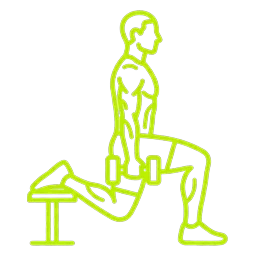
Dumbbell bulgarian split squat
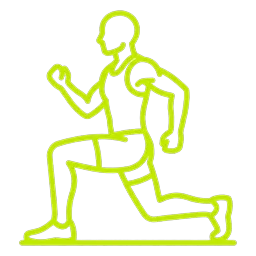
A unilateral lower-body exercise performed by placing one foot behind you on an elevated surface while holding dumbbells. It highly targets the quadriceps and glutes while improving single-leg stability and correcting strength imbalances.
Count your Dumbbell bulgarian split squat reps with AIFree in your browser — no app, no equipmentHow to Do Dumbbell bulgarian split squat
- Stand about two feet in front of a flat bench or elevated platform, holding a dumbbell in each hand at your sides with a neutral grip.
- Reach one foot back and place the top of your foot flat on the bench behind you, ensuring your hips are square and your feet are hip-width apart.
- Engage your core, keep your chest up, and lower your hips vertically until your front thigh is parallel to the floor and your back knee is just above the ground.
- Push firmly through the heel and midfoot of your front leg to drive your body back up to the starting position.
- Complete all repetitions on one leg before switching to the other.
Muscles worked
QuadricepsGluteus maximusHamstringsAdductors
Form tips
- Keep your front foot flat on the ground and focus on driving through the midfoot and heel, not the toes.
- To target the glutes more, lean your torso slightly forward; to target the quads, keep your torso more upright.
- Find a focal point on the floor or wall ahead of you to help maintain balance throughout the set.
Common mistakes
- Placing the front foot too close to the bench, which causes the front knee to push excessively past the toes and lifts the heel.
- Allowing the front knee to collapse inward during the descent or ascent, placing stress on the knee joint.
- Using the back leg to actively push up instead of letting the front leg do the majority of the work.
FAQ
How many reps and sets should I perform?
For hypertrophy and strength, perform 3 to 4 sets of 8 to 12 repetitions per leg. Adjust the weight so the last 2 reps of each set are challenging.
How high should the rear elevated bench be?
The bench or platform should ideally be around knee height, typically 12 to 18 inches. If it is too high, it can place excessive strain on your rear hip flexors.
Is this exercise bad for the knees?
No, when performed with proper form and appropriate weight, it strengthens the muscles stabilizing the knee joint. Avoid letting your front heel lift off the ground to prevent knee strain.