Leg extension
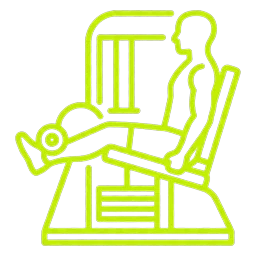
The leg extension is an isolation machine exercise that targets the quadriceps on the front of the thighs. It is highly effective for building quadriceps definition, strength, and supporting knee joint stability.
Count your Leg extension reps with AIFree in your browser — no app, no equipmentHow to Do Leg extension
- Adjust the backrest of the machine so your knees align perfectly with the pivot point of the lever arm.
- Position the lower leg pad just above your ankles on your lower shins, and sit with your back flat against the pad.
- Grip the handles on the sides of the seat to anchor your hips and keep your pelvis firmly in place.
- Exhale and extend your legs fully by contracting your quadriceps, pausing briefly at the top of the movement.
- Inhale as you slowly lower the weight back to the starting position under control, stopping just before the weight stack touches.
Muscles worked
QuadricepsHip flexorsCore
Form tips
- Keep your toes pointed slightly upward (dorsiflexion) throughout the movement to maintain tension.
- Actively pull yourself down into the seat using the handles to prevent your hips from lifting.
- Focus on a slow, controlled negative phase (eccentric) lasting 2 to 3 seconds to maximize muscle growth.
Common mistakes
- Using momentum or swinging the weight up, which shifts tension away from the quadriceps and risks knee injury.
- Letting the hips lift off the seat, which reduces the effectiveness of the exercise and strains the lower back.
- Allowing the weight stack to slam down between repetitions, losing all eccentric tension.
FAQ
How many reps and sets should I perform?
For hypertrophy, perform 3 to 4 sets of 10 to 15 repetitions with a controlled tempo, focusing on a strong contraction at the top.
Is the leg extension bad for your knees?
No, when performed with proper form and controlled weight, it is safe. However, avoid hyperextending the knees at the top or using excessively heavy weight if you have pre-existing patellofemoral issues.
Can I do leg extensions single-legged?
Yes, performing unilateral (one-legged) extensions is an excellent way to address strength imbalances between your left and right quadriceps.