Lunges bodyweight
A fundamental lower-body unilateral exercise that targets the quadriceps, glutes, and hamstrings to build lower-body strength, balance, and hip mobility.
Count your Lunges bodyweight reps with AIFree in your browser — no app, no equipmentHow to Do Lunges bodyweight
- Stand tall with your feet hip-width apart, shoulders relaxed, and your hands on your hips or held in front of your chest.
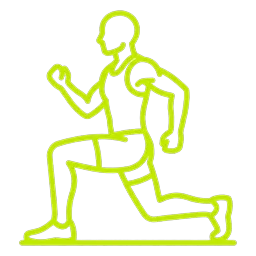
- Take a controlled step forward with one leg, keeping your torso upright and your weight centered between your feet.
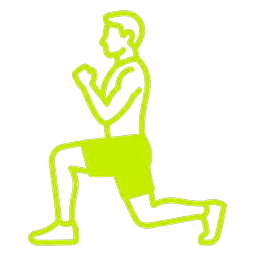
- Lower your hips until your front thigh is parallel to the floor and your back knee is hovering just above the ground, with both knees bent at roughly 90-degree angles.
- Push off firmly through the heel of your front foot to return to the starting standing position.
- Repeat the movement by stepping forward with the opposite leg, alternating sides for the duration of the set.
Muscles worked
QuadricepsGluteus MaximusHamstringsAdductors
Form tips
- Keep your chest proud and your torso upright to prevent excessive forward leaning and lower back strain.
- Ensure your front knee aligns directly over your ankle and does not cave inward during the descent.
- Engage your core throughout the entire movement to maintain balance and pelvic stability.
Common mistakes
- Stepping too short, which causes the front knee to extend far past the toes and increases joint stress.
- Letting the back knee slam forcefully into the floor instead of controlling the descent.
- Allowing the front knee to collapse inward, putting strain on the knee joint ligaments.
FAQ
How many reps and sets of bodyweight lunges should I do?
For general fitness and muscular endurance, aim for 3 to 4 sets of 10 to 15 repetitions per leg (20 to 30 total reps per set).
Should my back knee touch the ground during a lunge?
Your back knee should hover just an inch above the floor. Lightly grazing the floor is acceptable if controlled, but avoid slamming or resting your weight on it.
How do I stop losing my balance during lunges?
Avoid stepping directly in line with your back foot as if walking on a tightrope; instead, keep your feet hip-width apart as if standing on train tracks.