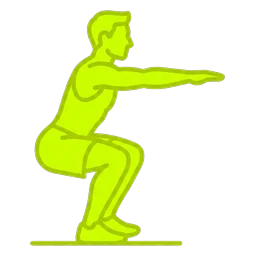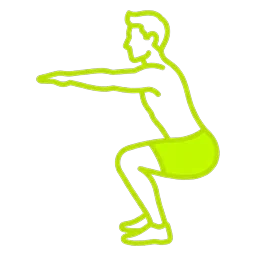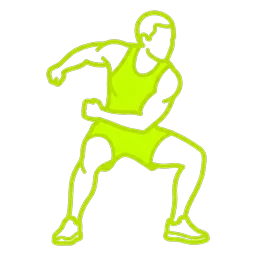
Rotation squat down
A dynamic bodyweight squat variation that incorporates a rotational pivot, enhancing multi-planar hip mobility, core stability, and lower-body strength.
Count your Rotation squat down reps with AIFree in your browser — no app, no equipmentHow to Do Rotation squat down
- Stand with feet shoulder-width apart, arms held at chest level for balance.
- Initiate the movement by pivoting your right foot 90 degrees outward while keeping your left foot planted, rotating your hips and torso.
- Lower your hips back and down into a squat, distributing your weight evenly between both feet in the rotated position.
- Keep your chest upright and your core engaged as you reach the bottom of the squat.
- Push through your heels to return to the starting standing position, pivoting your right foot back to parallel.
- Repeat the movement on the opposite side, pivoting your left foot to rotate in the other direction.
Muscles worked
quadricepsgluteus maximusobliquesadductorscalves
Form tips
- Maintain a tall spine throughout the rotation to avoid rounding your lower back.
- Ensure your knees track in line with your toes as you pivot and squat to prevent joint strain.
- Keep your core braced to control the rotational momentum and maintain balance.
Common mistakes
- Allowing the trailing knee to collapse inward during the rotation and squat.
- Lifting the heel of the pivoting foot excessively, which reduces stability and power.
- Rushing the movement, which compromises control, balance, and squat depth.
FAQ
How many reps and sets should I perform?
Aim for 3 sets of 10 to 12 repetitions per side (20 to 24 total reps per set) focusing on controlled, fluid movement.
What are the main benefits of adding rotation to a squat?
It trains your body in the transverse plane, improving hip mobility, coordination, and the functional strength needed for sports and daily rotational movements.
Is this exercise safe for people with knee pain?
If you have active knee pain, avoid this exercise or reduce the range of motion. The pivoting motion requires healthy joint rotation; consult a professional if pain persists.