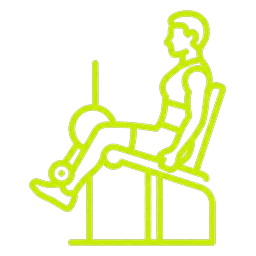
Seated leg curl
A machine-based isolation exercise that targets the hamstrings from a seated position, offering excellent stability and a deep stretch at the hip joint.
Count your Seated leg curl reps with AIFree in your browser — no app, no equipmentHow to Do Seated leg curl
- Adjust the machine so the back pad supports your lower back and the pivot point aligns directly with your knees.
- Place the lower leg pad just below your calves, above the Achilles tendon, and secure the thigh pad firmly against your thighs.
- Grasp the handles, sit tall with your chest up, and engage your core to stabilize your upper body.
- Pull your heels down and back toward your glutes in a smooth, controlled motion, squeezing your hamstrings at the peak of the contraction.
- Slowly return the weight to the starting position, maintaining tension on the hamstrings and avoiding slamming the weight stack.
Muscles worked
HamstringsGastrocnemius
Form tips
- Keep your feet dorsiflexed with your toes pointed upward to minimize calf involvement and maximize hamstring tension.
- Ensure the thigh pad is locked down tightly to prevent your hips from lifting off the seat during the movement.
- Emphasize the eccentric phase by taking 2 to 3 seconds to return the weight to the starting position.
Common mistakes
- Allowing the lower back to arch or the hips to rise off the seat to help cheat the weight down.
- Using momentum and swinging the weight instead of executing a controlled, muscular contraction.
- Setting the ankle pad too high on the calves, which reduces leverage and places unnecessary strain on the joints.
FAQ
How many sets and reps should I perform?
For muscle growth, perform 3 to 4 sets of 10 to 15 repetitions, focusing on a controlled tempo and a strong contraction at the bottom.
Is the seated leg curl better than the lying leg curl?
The seated leg curl places the hamstrings in a more stretched position because the hips are flexed, which research suggests can lead to slightly greater muscle hypertrophy compared to the lying leg curl.
Why do my calves cramp during this exercise?
Calf cramping often happens if you point your toes (plantarflexion) during the movement, which recruits the gastrocnemius muscle heavily. Keep your feet flexed (toes pointing up) to prevent this.