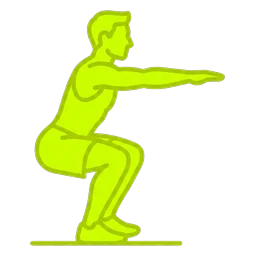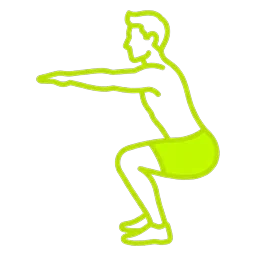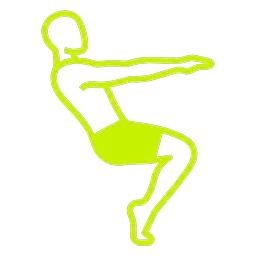
Sissy squat
The sissy squat is an advanced bodyweight exercise that isolates the quadriceps by leaning the torso backward while bending the knees and raising the heels. This movement builds exceptional quad strength and knee stability by placing maximum tension on the front of the thighs.
Count your Sissy squat reps with AIFree in your browser — no app, no equipmentHow to Do Sissy squat
- Stand upright with your feet hip-width apart, optionally holding onto a sturdy vertical post or rack with one hand for balance.
- Rise up onto the balls of your feet and push your hips forward so your body forms a straight line from your knees to your shoulders.
- Inhale and bend your knees to lower your body backward, maintaining the straight line through your torso and thighs without bending at the waist.
- Descend under control until your knees are a few inches from the floor, or as deep as your flexibility and joint comfort allow.
- Exhale and drive through the balls of your feet, contracting your quadriceps to return to the starting position while keeping your hips extended.
Muscles worked
Form tips
- Keep your glutes and core fully engaged throughout the movement to prevent your hips from hinging.
- Perform the eccentric lowering phase slowly and deliberately to minimize joint shear and maximize quad activation.
- Use your hand support strictly for balance rather than pulling yourself up with your upper body.
Common mistakes
- Hinging at the hips, which shifts the load away from the quadriceps and mimics a standard squat.
- Dropping into the bottom position too quickly, which puts dangerous kinetic stress on the patellar tendons.
- Allowing the knees to cave inward during the descent, which compromises knee joint alignment.
FAQ
Are sissy squats bad for your knees?
No, when performed with controlled form, they strengthen the patellar tendon and surrounding quad muscles. However, they should be avoided or modified if you have pre-existing knee pain or joint issues.
How many reps and sets of sissy squats should I do?
Aim for 3 to 4 sets of 8 to 12 controlled repetitions. Focus on maximum time under tension and perfect technique rather than high volume.
How can I regress this exercise if it is too difficult?
You can reduce the depth of your bend, use a resistance band anchored in front of you for assistance, or use a dedicated sissy squat bench machine to secure your feet.