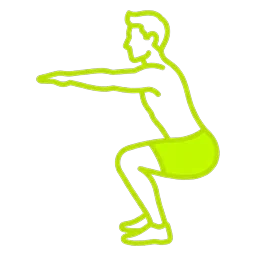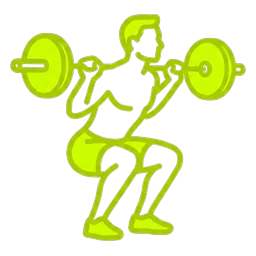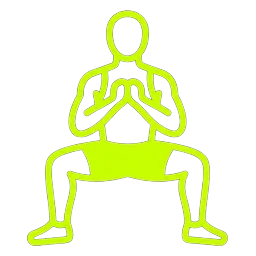
Sumo squat bodyweight
A variation of the standard squat performed with a wide stance and toes pointed outward, targeting the inner thighs and glutes. It is an excellent bodyweight movement for building lower-body strength, flexibility, and hip mobility.
Count your Sumo squat bodyweight reps with AIFree in your browser — no app, no equipmentHow to Do Sumo squat bodyweight
- Stand with your feet wider than shoulder-width apart, pointing your toes outward at approximately a 45-degree angle.
- Clasp your hands in front of your chest or extend them forward for balance, keeping your spine neutral and core engaged.
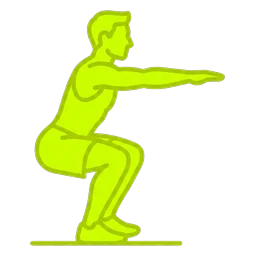
- Lower your hips back and down as if sitting in a chair, pushing your knees outward in the direction of your toes.
- Descend until your thighs are parallel to the floor, or as deep as your flexibility allows without rounding your lower back.
- Push through your heels to return to the starting position, squeezing your glutes at the top of the movement.
Muscles worked
GlutesAdductorsQuadricepsHamstrings
Form tips
- Keep your chest upright and shoulders back throughout the movement to prevent leaning too far forward.
- Ensure your knees track actively outward over your toes to avoid valgus collapse (knees caving in).
- Distribute your weight evenly across your feet, focusing on driving up through your heels and mid-foot.
Common mistakes
- Allowing the knees to collapse inward, which places excessive stress on the knee joints.
- Rounding the lower back at the bottom of the squat, often caused by tight hips or poor core engagement.
- Lifting the heels off the ground, which shifts the load onto the knees rather than the glutes and thighs.
FAQ
How many sets and reps should I perform?
For beginners, aim for 3 to 4 sets of 12 to 15 reps, focusing on slow, controlled movement and proper form.
What is the main difference between a regular squat and a sumo squat?
The sumo squat uses a wider stance and flared toes, which shifts the emphasis more onto the inner thighs (adductors) and glutes compared to a standard squat.
Is this exercise safe if I have tight hips?
Yes, but you should only descend as deep as your hip mobility allows without your lower back rounding or your knees collapsing inward. It can help improve hip mobility over time.